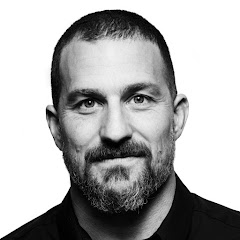
Andrew Huberman shares science-supported protocols for optimizing sleep, focus, physical performance, and overall health throughout a 24-hour daily cycle.
See Andrew Huberman live in New York, Los Angeles & San Francisco:
go.hubermanlab.com/protocols-event
In this episode I discuss science-supported tools for enhancing focus, learning, creativity, sleep, physical strength and endurance and brain and body health. I explain each protocol in detail, the rationale behind it, and how the protocol can be adjusted depending on individual needs. I set these tools in the context of a 24-hour day as a way of framing how one might incorporate these tools and protocols into their own daily routine.
Thank you to our sponsors:
ROKA - roka.com - code: huberman
InsideTracker - insidetracker.com/huberman
Headspace - helixsleep.com/huberman
Our Patreon page:
patreon.com/andrewhuberman
Supplements from Thorne:
thorne.com/u/huberman
Social:
Instagram - instagram.com/hubermanlab
Twitter - twitter.com/hubermanlab
Facebook - facebook.com/hubermanlab
Website: hubermanlab.com
Join the Neural Network: hubermanlab.com/neural-network
Timestamps:
Introduction: Protocols for sleep, mood, focus, exercise creativity
Sponsors
Protocol 1: Record Your Daily Waking Time & Temperature Minimum
Protocol 2: Self-Generate Forward Motion (Outdoors)
Protocol 3: View Natural Light For 10-30min Every Morning
What To Do If You Can’t View The Sun: Blue Light
Protocol 4: Hydrate Correctly
Protocol 5: Delay Caffeine 90-120m After Waking
Protocol 6: Fast (or Fat-Fast) Until Noon
What Actually Breaks A Fast & What Doesn’t?
Fat Loss & Glucagon-Like Peptide 1 (GLP1), Yerba Mate, Guayusa Tea
Protocol 7: Optimize Deep Work: Visual Elevation, Ultradian Cycles, White Noise
Optimal Time of Day To Do Hard Mental Work
Protocol 8: Optimal Exercise; 3:2 Ratio
Tools for Training & Mental Focus: Fasting, Salt, Stimulants, Alpha-GPC
Protocol 9: Eat For Brain Function & Mood
Protocol 10: Get Your Testosterone & Estrogen In An Ideal Range
Protocol 11: Reset the Mind & Body, Enhance Neuroplasticity, Reveri.com
Protocol 12: Hydrate Correctly, Nap Rules
Protocol 13: View Late Afternoon/Evening Light To Support Sleep & Dopamine
Protocol 14: Eat Dinner That Promotes Serotonin, Calm Sleep
Protocol 15: Optimize Falling & Staying Asleep; Tools & Supplements That Work
Protocol 16: Preventing Middle of the Night Waking
Protocol 17: Weekends, Recovering From A Poor Nights Sleep
Neural Network, Supplement Sources, Sponsors
Please note that The Huberman Lab Podcast is distinct from Dr. Huberman's teaching and research roles at Stanford University School of Medicine. The information provided in this show is not medical advice, nor should it be taken or applied as a replacement for medical advice. The Huberman Lab Podcast, its emp
Why it's here
3 people recommend this
What people say. Recommended for its highly effective, practical daily protocols that help improve sleep, focus, mental health, and productivity.
Moments people linked to
P
Prdiktin Hacker News • Recommends
On “Biohacking: Temp minimum suggests your most productive time”
Temp minimum and productivity are regulated by your circadian rhythm and there are many works on the topic. E.g., link , link . You also may want to listen to Dr. Andrew D. Huberman, a neuroscientist and tenured professor in the Department of Neuroscience at the Stanford University School of Medicine. He perfectly describes how it works in one of his YouTube videos: link to this video Will be great to hear back if you try this approach!
I've gone through two burnouts in my career. The first time around, I tried CBT (Cognitive Behavior Therapy), with limited results. Recently, I followed the Huberman protocol for sleep 1 and daily tools 2, with profound results. Recovery time was respectively 12 months (CBT) and 3 months (Huberman). YMMV 1link2link to this video
On “Ask HN: How do you work on your mental health?”
…es a week to doing it daily at 6:30am, which requires going to bed at 10pm. This was harder to get in to, but I suffered for a couple weeks and it's now a habit. This year, I'm continuing with the above but adding cold showers. Note that these are all physical rather than mental improvements, but their impact on my mental health has been huge. 1link to this video…
…if his podcasts episodes that:
... because starches cause the release of serotonin in the brain and lend themselves to a state of sleepiness.
Now, I should mention that about about 25% of individuals have genes that encode for enzymes that allow them to eat large amounts of carbohydrate and not suffer from this lethargy.
Timestamped Video: link to this video
Sadly he doesn't reference any kind of study or data that this claim is based on.
I am aware that serotonin is involved in digestion and that most serotonin found in the human body is in the gut. Though I do not know what its function is there or if this is even relevant for this question, given that Huberman specifically states
starch…
On “Why is standing more tiring than walking? [audio]”
…or directly forward or looking down, will dic tate whether or not you are feeling more alert or more sleepy, respectively. So try and arrange a work station or a position of your body in your chair or your standing desk, whatever it is, that allows you to work with a heightened state of alertness. (text pulled from Youtube captions) 0link1link to this video…