Skip to content
0:00 / 0:00

Kinesin Walking Narrated Version for Garland

Graham Johnson

2.9K subscribers • 1 video on Rounds

YouTube
  • Recommended by 1 person, in Biology Stack Exchange.

Assumes interest and some biology. Education, not medical advice.

354K views15 years ago1 recommendation

How the body worksCells and moleculesPhysiology

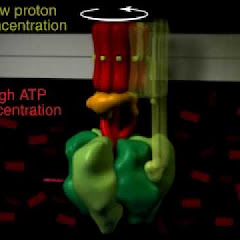
How the molecular motor kinesin walks along a microtubule protofilament to transport cellular cargo.

I created this animation of the molecular motor "kinesin" walking along a protofilament of a microtubule in 1999 for the Ron Milligan and Ron Vale Science paper referenced below. It was my first major project using Cinema4D instead of my old favorite StrataStudioPro on a mac. Mike Morales and Peter Walter created a narration for Garland publishers Molecular Biology of the Cell, Alberts et al. For details on the science behind the animated visualization, please check out the original paper: Vale, R. D. & Milligan, R. A. The Way Things Move: Looking Under the Hood of Molecular Motor Proteins Science, 2000, 288, 88-95 Created by Graham Johnson of fivth.com and Graham Johnson medical media www.grahamj.com, for Molecular Biology of the Cell, 4e by Alberts, Walter, et al, Gardland Publishers. ©2002 For more on simulating and animating molecules, cells and helpful plugins, please visit www.grahamj.com

Why it's here

1 person recommends this

What people say. Recommended as an informative visualization of molecular motor movement.

yamadin Biology Stack Exchange • Recommends

On “What is the mechanism that directs myosin walking?”

Good question that got me waist-deep in PubMed. It appears that the directionality of myosin motors is due to the angle at which the actin-binding catalytic domain is attached to the neck region. This review by Vale and Milligan, 2000, sums up the "unzippering" of the neck region that contributes the force for the movement (a link to this video adapted for Alberts' textbook is also informative). Most myosins move towards the plus end of actin, but myosin VI moves towards the minus end. The neck region of myosin VI attaches to the head region at a different angle than conventional myosins and this is the apparent reason for the change in direction preference (see Figure 1 in review by Rodriguez and C…