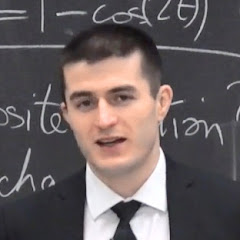
Jeff Hawkins discusses his Thousand Brains Theory of Intelligence, explaining how the neocortex uses reference frames to learn and model the world.
Jeff Hawkins is the founder of Redwood Center for Theoretical Neuroscience in 2002 and Numenta in 2005. In his 2004 book titled On Intelligence, and in his research before and after, he and his team have worked to reverse-engineer the neocortex and propose artificial intelligence architectures, approaches, and ideas that are inspired by the human brain. These ideas include Hierarchical Temporal Memory (HTM) from 2004 and The Thousand Brains Theory of Intelligence from 2017.
Thank you for listening ❤ Check out our sponsors: lexfridman.com/sponsors/ep25-sb
See below for timestamps, and to give feedback, submit questions, contact Lex, etc.
*CONTACT LEX:*
*Feedback* - give feedback to Lex: lexfridman.com/survey
*AMA* - submit questions, videos or call-in: lexfridman.com/ama
*Hiring* - join our team: lexfridman.com/hiring
*Other* - other ways to get in touch: lexfridman.com/contact
*OUTLINE:*
- Introduction
- Understanding how the human brain works
- Parts of the brain
- How much do we understand?
- Nature of time in the brain
- Building a theory of intelligence
- Thousand brains theory of intelligence
- Ensembles and sensor fusion
- Concepts and language
- Memory palace and method of loci
- Reference frames
- Open problems
- Context
- Introspective thinking about the brain
- Deep learning
- Benchmarks
- Brain learning process
- How far are we from solving intelligence
- Possibility of AI winter
- Consciousness and intelligence
- Mortality
- Will understanding intelligence make us happy?
- Existential threats of AI
- Super-human intelligence and our future
*PODCAST LINKS:*
- Podcast Website: lexfridman.com/podcast
- Apple Podcasts: apple.co/2lwqZIr
- Spotify: open.spotify.com/episode/36fSBVhA7F51YPqjp1CvnL
- RSS: lexfridman.com/feed/podcast/
- Podcast Playlist: youtube.com/playlist?list=PLrAXtmErZgOdP_8GztsuKi9nrraNbKKp4
- Clips Channel: youtube.com/lexclips
*SOCIAL LINKS:*
- X: x.com/lexfridman
- Instagram: instagram.com/lexfridman
- TikTok: tiktok.com/@lexfridman
- LinkedIn: linkedin.com/in/lexfridman
- Facebook: facebook.com/lexfridman
- Patreon: patreon.com/lexfridman
- Telegram: t.me/lexfridman
- Reddit: reddit.com/r/lexfridman
Why it's here
2 people recommend this
What people say. Recommended for its live explanation of a biologically plausible theory of intelligence and neocortical function.
g
gamegoblinin Hacker News • Recommends
On “The Thousand Brains Theory of Intelligence (2019)”
Highly recommend the Lex Fridman interview to listen to Jeff explain live: link to this video While Numenta doesn't have the amazing results of DeepMind and friends, I think they are doing really great stuff in the space of biologically plausible intelligence.
I wouldn't say that the Triune brain theory is a 'myth'. It's just not accurate, but it's not a complete lie either. There certainly are different parts of the brain that have evolved at different times, and have different functions. The older parts have evolved to specific functions, while neocortex, which is found in mammals, has a uniform structure and is capable of learning and adapting to different tasks. 75% of human brain is neocortex. Jeff Hawkings explains the difference between the 'old parts' and 'new parts' pretty well in this interview: link to this video
On “Jeff Hawkins: Thousand Brains Theory of Intelligence [video]”
There's a youtube generated one if you go to link to this video and click the three dots under the vid. I don't know if there's a way to get those things into an easy to read format? Clicking select all and pasting to the text editor sort of works but could be better.
On “YOLOv5: State-of-the-art object detection at 140 FPS”
…ues as to the gravity vector in the scene. Etc. etc. Seems like the camera motion is probably already solved with optical flow/photogrammetry stuff, but you might be able to use that to help scale the scene and start filtering your tagging based on geometric likelihood. The idea of hierarchical reference frames (outlined a bit by Jeff Hawkins here link to this video ) seems pretty compelling to me for contextualizing scenes to gain comprehension. Particularly if you build a graph from those reference frames and situate models tuned to the type of object at the root of each each frame (vertex). You could use that to help each model learn, too. So if a bike model projects a 'riding' edge towards the 'per…